I destroyed my computer by incorrectly cleaning the keyboard. Hundreds of dollars later in warranty and customs fees, hours on the phone, and nine weeks later, I have my computer back. In the next few days I will post no less than 10 entries that I've been wanting to share with you all. When I travel across Mexico in two weeks I will not have my computer, so I will not be able to post new entries until January 7. I will have my camera however.
I have to thank my father for paying for shipping fees, buying another warranty, and installing the software. Thank you so much.
Kevin
Saturday, December 6, 2008

Saturday, October 11, 2008
Hiatus
This week my laptop literally melted. After washing it with a damp towel, the computer overheated so much that the plastic melted. I've sent the laptop home so Dell can fix it for no charge. While this is a major inconvenience, the worst part is that I will not be able to update the blog until I get the laptop back. This could take up to a month. While I can still write new entries, I don't have the software to transfer the pictures. This blog requires photos in my opinion. Imagine reading National Geographic with no photos.
I have plenty of ideas for my next entries, and I have photos that I want to load. I've even written some of the next posts. However, I will not post them until I get the laptop. Expect a slew of entries in the first two weeks of November.
As they say in Mexico, esta la vida. That's life.
Other than the laptop, everything else is fine.
Kevin
Saturday, October 4, 2008
Dramatis Personae
This is a brief biography of all the teachers at CulturLingua, the school I teach at. It's small. There are only seven teachers, a daily coordinator, and a director.
I'll start with me. As you all know I'm 22-years-old. I graduated from George Mason with a BS in Geography. I obtained my CELTA from Saint Giles in July 2008 (I just received my diploma). I want to work, live, and teach in Latin America for the foreseeable future. My goal is to teach business English at a professional school, either somewhere in Central America or Brazil. I want to make teaching English a profession. Some day, I will start my own magazine, but I need to become a freelance writer first. This is the first time I've been to Latin America, or any country whose primary language isn't English. I've been to Canada three times, and the UK once. I plan to spend most of the rest of my life in Western Hemisphere.
 Dan Brown is 41. He was born in the United States, grew up in Mexico until he was nine-years-old, and then moved back to California. He is bilingual. He's been at CulturLingua since the middle of August but has been in Mexico since last year. Dan has taught for eight years becaues he finds it rewarding and he likes it. Dan teaches Beeline 2, which is composed of 12 young boys and girls. Dan has also travelled to Canada, the Bahamas, Belize, Guatemala, Spain, and Japan. Dan likes the relaxed atmosphere of Sahuayo. He says the neighbors are friendly and he enjoys the interaction. His purple hair is a testamount to his eccentric tastes. He plays music at bars in and around Sahuayo. He says he's the black sheep of his family.
 Ricardo is the coordinator of CulturLingua. He recruits new students, deals with parents and misbehaving students, but most of all, helps the teachers. He makes copies, procures materials, and contacts Cecilia, the coordinator, on a daily basis. He opens and closes the school. Without him, we wouldn't be able to do our jobs.
 Salvador is our oldest teacher. He's from Los Remedios ("The Remedies"), a town not too far from here. He has lived in Sahuayo since his mother died a couple years ago. He has one daughter (age 13), and one son (17), who suffers from Lou Gehrig's disease. He learned English 30 years ago and speaks it almost as well as any native. He has taught at CulturLingua previously. He also works at another school called CETIS. He relaxes in Los Remedios on the weekends. He teaches us Spanish on Monday, Tuesday, and Wednesday mornings.
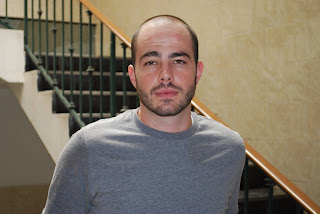 Kris is a 24-year-old graduate of the University of Ohio. He's here to learn Spanish, and gain valuable teaching experience, so he can teach Spanish in the United States. He's been in Mexico for two months, and has already been to Guadalajara and Puerto Vallerta. He's been to Canada (Quebec and Niagara Falls), Ecuador, Spain, France, Italy, and Austria.
 Angela is the youngest teacher we have. She moved in with Kris, Erika and me two weeks ago. She has no university degree but does have a CELTA. She's 19-years-old and a native of Bellingham, Washington. She's a devout Christian and is leaving at Christmas break to be with her family, as Christmas is very important to her. She's enjoying life in Sahuayo, but it's hard because she doesn't know Spanish. She says teaching is a "good way to travel. It's a relaxed atmosphere." Angela has been to Canada, Hawaii, Mexico (Acapulco and Mazatlan), as well as Laos and Myanmar.
I'll start with me. As you all know I'm 22-years-old. I graduated from George Mason with a BS in Geography. I obtained my CELTA from Saint Giles in July 2008 (I just received my diploma). I want to work, live, and teach in Latin America for the foreseeable future. My goal is to teach business English at a professional school, either somewhere in Central America or Brazil. I want to make teaching English a profession. Some day, I will start my own magazine, but I need to become a freelance writer first. This is the first time I've been to Latin America, or any country whose primary language isn't English. I've been to Canada three times, and the UK once. I plan to spend most of the rest of my life in Western Hemisphere.
Dan Brown is 41. He was born in the United States, grew up in Mexico until he was nine-years-old, and then moved back to California. He is bilingual. He's been at CulturLingua since the middle of August but has been in Mexico since last year. Dan has taught for eight years becaues he finds it rewarding and he likes it. Dan teaches Beeline 2, which is composed of 12 young boys and girls. Dan has also travelled to Canada, the Bahamas, Belize, Guatemala, Spain, and Japan. Dan likes the relaxed atmosphere of Sahuayo. He says the neighbors are friendly and he enjoys the interaction. His purple hair is a testamount to his eccentric tastes. He plays music at bars in and around Sahuayo. He says he's the black sheep of his family.Ricardo is the coordinator of CulturLingua. He recruits new students, deals with parents and misbehaving students, but most of all, helps the teachers. He makes copies, procures materials, and contacts Cecilia, the coordinator, on a daily basis. He opens and closes the school. Without him, we wouldn't be able to do our jobs.He's 37-years-old and was born in Sahuayo. He hasn't always lived here, however. He moved to the United States when he was18. He worked in various kitchens in Neveda, Arizona, and California. In 2004 he came back. He's single and has no family. He's been at CulturLingua for a year. "I like Sahuayo," he says.
Salvador is our oldest teacher. He's from Los Remedios ("The Remedies"), a town not too far from here. He has lived in Sahuayo since his mother died a couple years ago. He has one daughter (age 13), and one son (17), who suffers from Lou Gehrig's disease. He learned English 30 years ago and speaks it almost as well as any native. He has taught at CulturLingua previously. He also works at another school called CETIS. He relaxes in Los Remedios on the weekends. He teaches us Spanish on Monday, Tuesday, and Wednesday mornings.Kris is a 24-year-old graduate of the University of Ohio. He's here to learn Spanish, and gain valuable teaching experience, so he can teach Spanish in the United States. He's been in Mexico for two months, and has already been to Guadalajara and Puerto Vallerta. He's been to Canada (Quebec and Niagara Falls), Ecuador, Spain, France, Italy, and Austria.Kris says Sahuayo is a small town, but a medium-sized city, where everyone knows everything. Gossip travels fast, and people have a penchant for "making stuff up." Kris has found a girlfriend here and plans to stay through next summer. He has a passion for playing guitar, which he plays every night in the living room.
Erika is frombeautiful Cape Town, South Africa. She has no prior teaching experience, and no unveristy degree. She says she's here to "try [teaching] out." She's been here for three months. In fact, she was the one who assured me Sahuayo is safe (she's right). Unfortunately, she cannot extend her visa and will have to go back to South Africa in November. Getting to Sahuayo took her more than a day. Erika has been a vagabound: she worked as a security guard in London. She has also been to Scotland, Paris, Greece, Venice, Berlin, Barcelona, and the following cities in India: New Dehli, Goa, Varanasi, Agra, Jaipur, and the Kerala state. She has no idea what she wants to do with her future.
Angela is the youngest teacher we have. She moved in with Kris, Erika and me two weeks ago. She has no university degree but does have a CELTA. She's 19-years-old and a native of Bellingham, Washington. She's a devout Christian and is leaving at Christmas break to be with her family, as Christmas is very important to her. She's enjoying life in Sahuayo, but it's hard because she doesn't know Spanish. She says teaching is a "good way to travel. It's a relaxed atmosphere." Angela has been to Canada, Hawaii, Mexico (Acapulco and Mazatlan), as well as Laos and Myanmar.Kevin
PS- I will have photos of me and Erika in a few days.
Saturday, September 27, 2008
Noise
Sahuayo is a small town (pueblo) of 60,000 people. Nonetheless, sometimes the noise rivals a big city.
My room is three floors above the street. Unfortunately my window doesn't close all the way. There is a small crack between two of the panes. This means I hear everything. As I'm writing this on Saturday afternoon, it's not that bad. I hear the occasional car. During the week, I hear much more. Vendors drive cars with megaphones attached to the top. I hear the same ads day after day. Mopeds, ATVs, buses vans, pick up trucks, and cars produce a cacaphony of noise. I can hear the music in everyone's vehicles. Mexicans love to turn up the bass. Young adults who go out at night yell and laugh. If I knew more Mexican slang, I'd know what they were saying.
If the vendors aren't driving, then the taxi drivers are constantly looking for their next passenger. "Tax-EE!" they yell.
Earlier this week huge blasts woke me up at 6:15. When I woke up at my usual time two hours later, the power was out. I thought that a transformer had blown. Apparently, they were fireworks. Two nights later, I heard the same blasts. Ricardo, my director, told me Mexicans launch fireworks all year. As you all know, I love fireworks, but they have their place. I like them on Independence Day. I don't like them at 6:15 in the morning during the week.
At school, the noise is particularly annoying when I'm trying to teach pronunciation. The windows in my room are wooden doors. I hear everyone's music. When it's loud enough, it sets off car alarms. Kids down the street launch fireworks, for no particular reason.
The only sound I like is the bell that rings every hour on top of the La Parroquia, the church in the center of the city. It's calming and reassuring.
Kevin
Monday, September 22, 2008
Daily Life
Routine
I’m settling into a routine. On the weekends I wake up, run on Dos Barsco, and then come home and eat breakfast as always. My roommates are usually still asleep. I go to bed 12:15 every night, as I don’t have to wake up until 8: 15 during the week. I don’t want to wake up at a different time on the weekends. On Saturday I go to the Bodega to get both frozen and raw vegetables, paper towels, and other necessities. I go to the market on Tuesdays, since it’s only two blocks from my apartment. I update the blog, finish my lesson plans. I stretch before making dinner at 9:15.
During the week I wake up at 8:15 so I can teach my morning class, which has three students. I go home, and I either go to the gym, or I go running. I don’t like training after I’ve been awake for several hours. I prefer to get out of bed and work out, but what can I do? Afterwards, I have some lunch, take a shower, translate an article in Spanish, brush my teeth, and then go back to school from 3:00 to 8:30. On Tuesdays, after my morning class, I take a Spanish class with Salvador, a part-time teacher at CulturLingua. I come home at night, pack a lunch for the next day, make dinner, catch up on e-mail, read some news, and make preparations for the next day.
Inconveniences
I knew I would have to put up some inconveniences when I came to Mexico. Not only because I’m in a different country, but also because I’m in a new place. Traveling anywhere different requires adaptation and tolerance. I don’t pay for the apartment, which helps me save money, but this also means that the conditions aren’t as good as they are back in Virginia. My room is large, but doesn’t need to be, since it has no desk (other than a couple old desks found in a classroom), hardly any storage, and no dresser. But oddly it has two beds and a yoga mat (which I use).
Water is another problem. Water is not potable in Mexico. We therefore spend 80 Pesos every two weeks to buy five large water dispensers. I can’t rinse my toothbrush with the water, so I have to use the water in the tea pot. If I want cold water I have to take ice out of the ice trays in the freezer. Cold water requires advanced planning therefore. Hot water isn’t instant. When we want to take a shower, we have to turn on the heater for 15 minutes before we can take a shower. Even then the water temperature is only luke warm.
While we do have internet access, there is no printer. I still can’t find a store that sells office supplies, such as paper and pens. For those items I have to go to the Bodega every week. Half the light bulbs here don’t work. When it rains hard, some of the water seeps through the windows.
Kitchen
I require a good kitchen. Because I like to cook and prepare all my food, I need a large amount of space, and essential tools: colander, knives, forks, pots, pans, a blender, bowls, a teapot, pantry space. This apartment was not built for me. There’s only a small pantry for all my food. Erika told me that before I came the refrigerator was empty. I have to light the stove and oven with a lighter. There are no drawers. There’s no dishwasher, which means my roommates leave their dirty dishes everywhere. I basically own the freezer (Kris keeps some hot dogs in there). I keep everything I need in a separate place. I have my own measuring cup, my own cutting board, my own paper towels, and my own silverware.
But I'm adapting.
Kevin
Saturday, September 20, 2008
Safe in Sahuayo
On Monday Night when all of Mexico was celebrating the country’s independence, bombs killed seven and injured at least 100 people in Morelia, the capital of Michoacan, the state in which I live. As the governor of the state, Leonel Godoy re-enacted Miguel Hidalgo’s famous grito, bombs and bells produced a cacophony and chaos and pan demonium. Authorities don’t know who attacked, but evidence does point to drug cartels. If true, this would be the most discriminate attack yet. Usually the cartels attack threats to their business, not citizens.
Drug violence has killed 2,700 people, including 500 police officers. This is an inevitable result of President Felipe Calderon’s crackdown on the drug trade since took office in December 2006. Calderon’s plan has sent 40000 officers and 50000 federal police to hot spots in the country. Police commanders have been purged, good officers are promoted, new positions are being added, and the federal officers are receiving more pay.
I’m not writing this to scare anyone, only to assure them that I’m safe in Sahuayo. I have never felt unsafe here. In fact, it’s safer than San Francisco or Washington, D.C. I don’t see any bums here. People sit on the sidewalk and talk. Shops close early. Old men sit at the plaza and talk well into the night. Although most people here can tell that I’m a native, I don’t feel awkward. That’s why I was surprised, and a little annoyed, that my landlord decided to install a security door at the entrance to my building. It’s one more door to unlock.
Every morning I wake up and see the La Parroquia, the resplendent church in the center of the city. Perhaps God watches over us after all.
 demonium. Authorities don’t know who attacked, but evidence does point to drug cartels. If true, this would be the most discriminate attack yet. Usually the cartels attack threats to their business, not citizens.
Authorities are blaming either La Familia, which denied it was involved, and the powerful Zecas gang. In fact, one suspect is from Sahuayo. One other is from San Pedro, a town not too far from hereLast Friday authorities found 12 dead bodies outside the capital. At the end of August authorities found 12 decapitated bodies in Yucatan. In Tiajuana, another four bodies were found. Violence in the northern part of the state, in places like Baja California, and Sinoloa is attributed to the Arellano Felix led by Fernando Sanchez Arellano, and a rival faction led by Teodoro Garcia Simental. Sinaloa is home to one of the most powerful drug cartels in Mexico, founded by fugitive leader Joaquin "El Chapo" Guzman.
Drug violence has killed 2,700 people, including 500 police officers. This is an inevitable result of President Felipe Calderon’s crackdown on the drug trade since took office in December 2006. Calderon’s plan has sent 40000 officers and 50000 federal police to hot spots in the country. Police commanders have been purged, good officers are promoted, new positions are being added, and the federal officers are receiving more pay.
The other problem is the police itself. In the state of Coahuila, police were carrying seven drug suspects when they ran into another caravan of suspects. In the ensuing standoff, one policeman was killed and 33 more were arrested. The suspects were police officers from Torreon. The country’s former drug czar, Jose de Jesus Gutierrez Rebello, was arrested ten years ago for colluding with the drug cartels. Mexicans fear the current czar, Genaro Garcia Luna, doesn’t follow the same path.
All this is bad for business, which has to spend more and more money on security and less on paychecks, expansion, or R&D. It does help that the drug cartels don’t seem to be affecting the country’s three largest sources of income: oil, tourism, and remittances.
I’m not writing this to scare anyone, only to assure them that I’m safe in Sahuayo. I have never felt unsafe here. In fact, it’s safer than San Francisco or Washington, D.C. I don’t see any bums here. People sit on the sidewalk and talk. Shops close early. Old men sit at the plaza and talk well into the night. Although most people here can tell that I’m a native, I don’t feel awkward. That’s why I was surprised, and a little annoyed, that my landlord decided to install a security door at the entrance to my building. It’s one more door to unlock.
Every morning I wake up and see the La Parroquia, the resplendent church in the center of the city. Perhaps God watches over us after all.
Tuesday, September 16, 2008
Independence Day

Today is Independence Day in Mexico. The country is now 198 years old. Sort of. On September 16, 1821 Miguel Hidalgo, the curate of Dolares, made his Cry for Independence or Girto de Dolares. In his speech Hidalgo spoke of insurrection and rebellion. Hidalgo demanded the end of slavery, equality among men, land reform, and an end to state monopolies over gunpoweder and tobacco. The revolution had just begun, however. Spain laid siege to Guadalajara. Hidalgo was captured in Chihuahua, and executed on July 30, 1811. Hidalgo’s disciple, a priest named Maria Morelos y Pavon waged a campaign until he was imprisoned and executed in 1815. It was only when a Spanish commander, Agustin de Iturbide, defected and joined Vicente Gurrero, that Spain relinquished Mexico. Guerrero and Iturbide, who would later become emperor, announced the Plan of Iguala, which made Roman Catholicism the only recognized religion, made all Mexican citizens equal, and established a constitutional monarchy. The Treat of Cordoba officially converted New Spain into Mexico on August 24, 1821. But Iturbide didn’t last long either. Only a year later General Antonio Lopez de Santa Ana betrayed him, and executed him as well.
Like most national celebrations, Mexico’s Independence Day is inconsistent with history. The United States celebrates independence on July 4. But most of the men who signed the Declaration of Independence didn’t sign in Philadelphia that day. They signed it over the ensuing months. In fact, the declaration didn’t make America independent. It would be more than five years before Gen. Washington and Pierre Laffeyete surrounded General Cornwallis at Yorktown. That day was October 17 1781. The Treat of Paris, which formally recognized America, wasn’t signed until September 3 1783. Likewise, Bastille Day in France, July 14, wasn’t celebrated as a national holiday until 1880. Perhaps because other events such as September 22, 1792, the actual founding of the French Republic, or August 26, 1789, the day the Declaration of the Rights of Man was adopted, were more important and symbolic.
I’ve already established that September 16 has little historical significance. But its symbolism is what Mexicans celebrate. And celebrate they do. Not only is September 16 a national holiday, but September 15 is too. Here in Sahauyo, there were festivals every night on Sunday, Monday, and Tuesday. Men wore sombreros, and as you can see in the photo, so did the next generation of Mexicans. Women wore elaborate dresses. The people celebrated their history, their cuisine, their music, and their culture. The whole town congregated at Miguel Hidalgo plaza. It rained on Monday, and the power went out for awhile, but the parades continued.
Even though the Mexican revolution did nothing to alleiviate the problems that afflicted the country and burdened the population, at least Mexico can say that it has gone longer without a violent overthrow of the government than any other country in Latin America. 2010 will mark 100 years of the peaceful transfer of power in Mexico.
Subscribe to:
Posts (Atom)